Our website uses cookies and other similar tools. We also analyze anonymized web traffic. You can choose your cookie preferences below. You may choose only necessary cookies, specific cookies or all cookies. Read more in our privacy policy
Home > All articles > Digital contraception is a cost-effective alternative to hormonal contraception
Digital contraception is a cost-effective alternative to hormonal contraception
Digital contraception is a cost-effective option to contraceptive pills and other hormonal methods, according to studies conducted in Sweden by Natural Cycles and Medaffcon. Digital contraception does not involve hormones and therefore avoids the typical side effects associated with hormonal methods.
Natural Cycles is a digital contraceptive method based on tracking an individual menstrual cycle. The app has more than five million registered users in over 160 countries. It was CE-marked as a contraceptive method in the EU in 2017 and FDA-cleared in the United States in 2018.
According to Sofie Askervall, Nordic Market Director at Natural Cycles, the company’s goal is to act as a pioneer and empower women to make informed decisions about their own health. Digital contraception demonstrates that there is still a need for new, user-centric solutions in women’s healthcare, even though healthcare systems in many countries have yet to keep pace with innovation.
Studies show that Natural Cycles has a contraceptive effectiveness of 93% with typical use, which is comparable to that of contraceptive pills. Condoms have a typical effectiveness of 87%, while hormonal intrauterine devices reach over 99%.
A health economic analysis conducted in Sweden by Medaffcon and Natural Cycles show that Natural Cycles is a cost-effective alternative to contraceptive pills, particularly when potential side effects of hormones are also considered.
Digital Contraception Increases Women’s Freedom of Choice and Autonomy
According to Askervall, one of the most significant benefits of digital contraception is the increased freedom of choice and autonomy it offers women.
“Many women need hormone-free and non-invasive contraception, but the available options have been limited. Digital contraception responds to this need. At the same time, it challenges the persistent misconception of a regular 28-day menstrual cycle, which does not apply to most women. Only about 13% of women have a 28-day cycle,” Askervall says.
She adds that there is a knowledge gap around fertility and many women are unaware that pregnancy is possible only during a few days each cycle. Digital contraception makes this information visible and easy to understand.
The Biggest Challenges Lie in Systems, not Users
According to Askervall, the biggest challenges facing Natural Cycles are not related to users, but to healthcare systems in different countries, where contraception is largely built around hormonal and invasive methods.
Natural Cycles has submitted reimbursement applications in several countries, but some authorities do not accept the app as a contraception, even though regulatory agencies have classified it as such.
In Finland, for example, the method has not been considered sufficiently significant for large-scale assessment, which directly affects users’ everyday lives.
Digital Solutions Challenge Established Views on Contraception
Digital solutions challenge established perceptions of what constitutes acceptable contraceptive methods and which health benefits are considered measurable.
“Trust is built through data, research, and transparency. We have encountered a great deal of criticism stemming from a lack of information, which is why we communicate as openly as possible,” Askervall says.
Although the effectiveness and impact of Natural Cycles has been demonstrated in studies, they are not treated in the same way as other contraceptive methods. For example, Nordic countries reimburse part of the costs of many other contraceptive methods, but not contraceptive apps.
In many countries, over the counter contraception is also subject to taxation, even though contraceptive products on prescription are generally tax-exempt. In Finland, the value-added tax on the app is 25.5% and in Sweden 25%. However, there’s an EU directive that accepts reduced VAT on healthcare products, including contraception.
Natural Cycles has collaborated with Medaffcon for about a year. According to Askervall, the cooperation has been successful and long-term.
“They quickly understood the significance and potential of the product and saw it as part of the modernization of contraception and healthcare. The work carried out for TLV (The Dental and Pharmaceutical Benefits Agency) was in many ways the first of its kind and demonstrated just how new the field of digital contraception still is. Change takes time, but the direction is clear,” Askervall concludes.
Facts
Natural Cycles is a paid contraceptive app developed by Swedish particle physicist Dr. Elina Berglund Scherwitzl and her husband Dr. Raoul Scherwitzl.
The method is based on measuring body temperature, heart rate and other fertility indicators which through an algorithm gives users a daily fertility status. On Red Days, users have to abstain or use a barrier method and on Green Days, they are not fertile and can have unprotected sex.
Initially, users measured their temperature with a thermometer. Over time, Natural Cycles and the method has evolved, and a wearable wristband that measures temperature, heart rate and movement is now used.
The company has partnerships with Oura Ring and Apple Watch. Thanks to these wearable integrations, temperature is measured automatically during sleep, and the data is synced with the app without manual input. These solutions lower the threshold for tracking one’s body and make contraception more accessible.
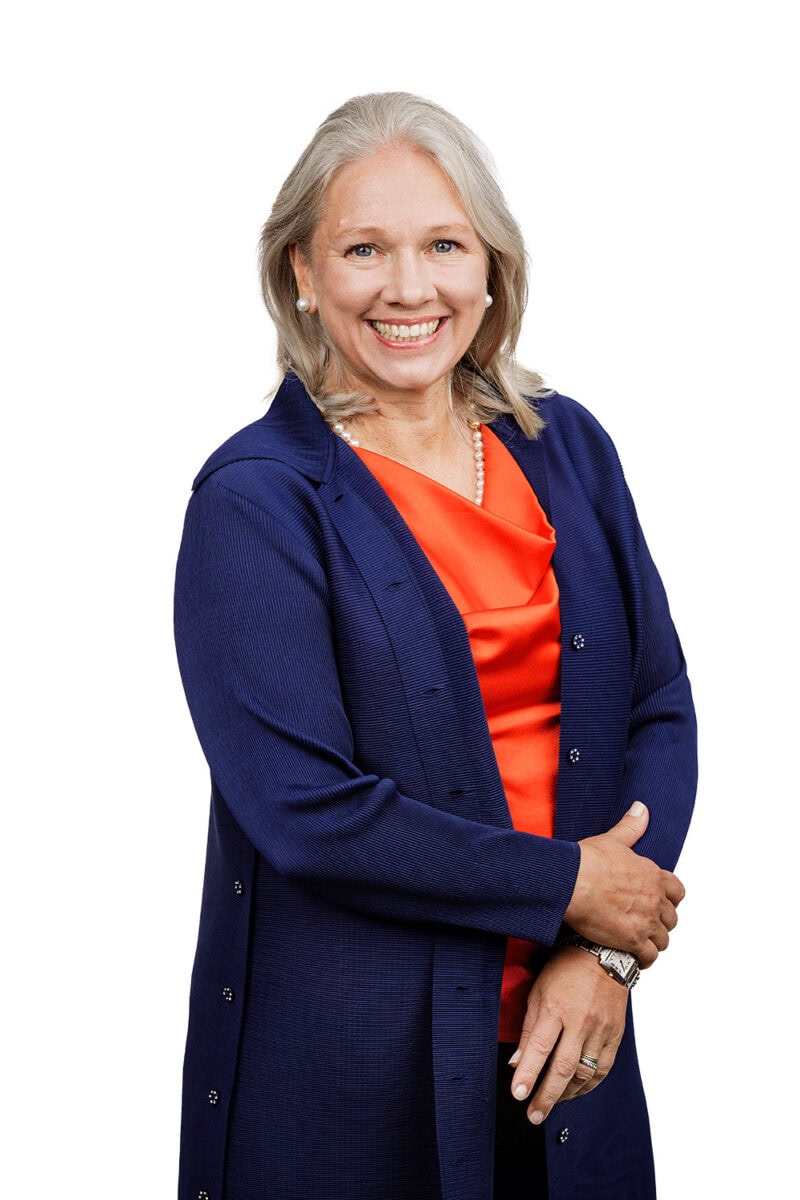
Lisse-Lotte started at Medaffcon 1st of October 2024. Previously she was at a Swedish-German company as CSO Chief Scientific Officer, consulting European companies about Nordic health data opportunities and market access. She has a M.Sc (Econ.) from Helsingin School of Economics and a M.Sc (Health Econ) from Karolinska. Additionally a Ph.D student at the University of Turku in Health Economics. She has obtained a long experience from global pharma and medtech. She has lived over 20 years in Sweden.
The current development gives new possibilities to utilise data. With AI we can produce synthetic data and build digital twins that can actually support drug development and support healthcare providers. Innovative solutions are only useful if they are adopted to daily practice.
Old ways of working will vanish and RWD will be acknowledged as an excellent option or support for RCTs. As RWD is enabling more cost-effective evidence generation for new treatments. Treatments need to be more personalised so that the right drugs, diagnostics and devices are used for the right patients at the right time.