Medaffcon and EasyHTA Develop New Tools for Health Economic Assessment
Medaffcon and EasyHTA are developing new ways to make health economic assessments faster and more transparent.

Follow us on LinkedIn to stay up-to-date!
Medaffcon and EasyHTA are developing new ways to make health economic assessments faster and more transparent.
Three new studies based on Medaffcon’s CORE datasets provide fresh insights into cancer care, examining treatment-related time burden, survival in the HUS region, and the relationship between education and cancer survival.
When local evidence is insufficient to support decision-making, research findings and real-world evidence generated elsewhere may help fill the gap.
Finland is currently developing a national assessment and decision-making model for medicines.

Companies are becoming increasingly selective about where they launch new medicines and where they invest in research.

Medaffcon’s Sales Lead Tomi "Tomppa" Vahevaara will retire on October 1st 2026. Tomppa leaves behind an exceptionally long career in the pharmaceutical industry spanning 45 years.

In a data gap analysis, gaps in the available information of the therapy area and data on a medicinal product are mapped and assessed against regulatory, scientific, and business requirements.

Medaffcon brings to the health technology market the kind of effectiveness and cost-conscious thinking well established in the pharmaceutical industry.

The objective is to improve access to health data for research and innovation, but the proposal raises concerns about increased administrative burden and the role of industry within the model.

Transportability and generalizability refer to the ability to apply evidence from a single study to different patient populations, clinical settings, or geographical regions.

The reform of the Secondary Use Act will establish a new decentralised process, in parallel to the current centralised permit model in which Findata grants all data permits.
Finland is moving toward the European Health Data Space (EHDS) with strong national systems, but local readiness, funding, and interoperability remain challenges.
Finland is currently developing a national assessment and decision-making model for medicines.

Medaffcon prepares around 25–30 renewal applications each year for approximately 10–15 clients. The volume ensures well-established routines and consistently high quality.
Pharmaceutical companies’ product portfolios are valuable assets, yet they may remain underutilised. How to unlock the full potential of a drug portfolio?
The United States is seeking to curb pharmaceutical expenditure by incorporating international price referencing into public health insurance programs.
Medaffcon brings to the health technology market the kind of effectiveness and cost-conscious thinking well established in the pharmaceutical industry.

While the majority of Medaffcon’s revenue comes from the pharmaceutical industry, the company’s activities are not limited only to commercial projects. At any given time, several academic projects may be ongoing.
When local evidence is insufficient to support decision-making, research findings and real-world evidence generated elsewhere may help fill the gap.

TTE is particularly valuable when there's a need to directly compare two treatments using real‑world data, especially when such comparisons have not been evaluated in RCTs.
Transportability and generalizability refer to the ability to apply evidence from a single study to different patient populations, clinical settings, or geographical regions.

Target Trial Emulation does not replace randomized controlled trials, but it applies their logic and rigor to real-world data analysis.

The data team keeps Medaffcon's research projects on track and ensures that the research findings are scientifically sound. At the heart of the team’s work is the processing and analysis of patient data, particularly in RWE studies.

The algorithm was originally developed to extract smoking status from patient texts with purpose to analyze the effects of smoking on postoperative complications. Today, it is also being utilized in lung cancer research.
The study generated significant new insights into the epidemiology, treatment, and prognosis of the rare blood cancer Waldenström’s macroglobulinemia.

The RWE study examined the treatment of patients with metastatic NSCLC, illustrating how treatment practices have changed from the first years of immunotherapy to present day.

The monitoring and diagnosis of diabetic kidney disease are often insufficient in Finland. This is confirmed by two real-world evidence (RWE) studies.

A large proportion of patients with psoriasis need to switch biologic treatment after initiation. This finding emerges from two RWE studies focusing on plaque psoriasis and psoriatic arthritis.
The studies are based on Medaffcon’s Collaboration Research (CORE) dataset – a unique research platform.

This Finnish registry-based study investigated the development of treatment practices and patient outcomes between 2013 and 2022.
Companies are becoming increasingly selective about where they launch new medicines and where they invest in research.
The United States is seeking to curb pharmaceutical expenditure by incorporating international price referencing into public health insurance programs.
Digital solutions challenge established perceptions of what constitutes acceptable contraceptive methods and which health benefits are considered measurable.
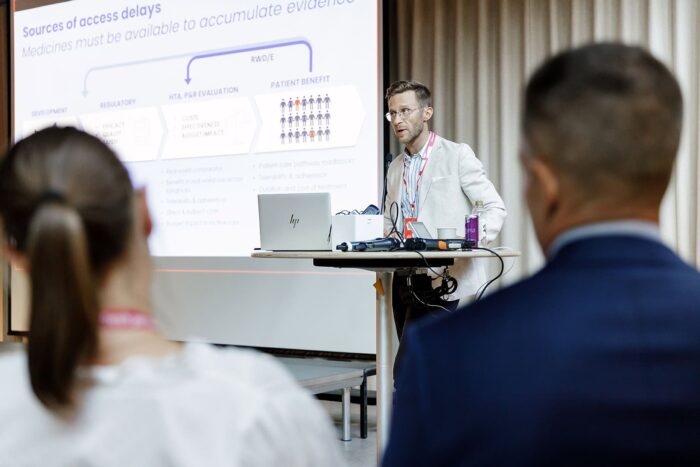
Access times to medicines vary greatly between European countries, and delays in oncology drugs in particular are increasing.
Target Trial Emulation does not replace randomized controlled trials, but it applies their logic and rigor to real-world data analysis.
Medaffcon provides skilled temporary workforce solutions for its client companies. An outsourced expert is a flexible solution to address a company's short-term resourcing challenges.
Sweden and Finland are leaders in developing and applying health technology and provide ideal environments for conducting Health Technology Assessments (HTA) for medical devices.

Patient Dynamics caters to the needs of pharmaceutical companies by providing precise information for sales and marketing decision-making.
Medicines in Finland are divided into medicines in ambulatory and hospital care. This article describes these two routes and provides information of the market access options and pricing system in Finland. Updated annually.