Medaffcon Explored Transportability of Evidence Between Finland and the United States
When local evidence is insufficient to support decision-making, research findings and real-world evidence generated elsewhere may help fill the gap.

Analyzing electronic health record (EHR) data has already provided us with new insights in medical research and holds great promise for the future.
Unfortunately, many of the EHR systems were not designed with retrospective scientific study in mind and much of the interesting information lies in digital, but unstructured form. The largest source for this unstructured information in the hospital are different kinds of dictations and written notes that describe the patients’ status.
In the video, I quickly go over some of the approaches that we have taken at the Auria Biobank in analyzing such information and show some examples about the promising results we have obtained. Our tools vary from the trivial but very effective regular expressions all the way up to neural net driven vector space representations of words.
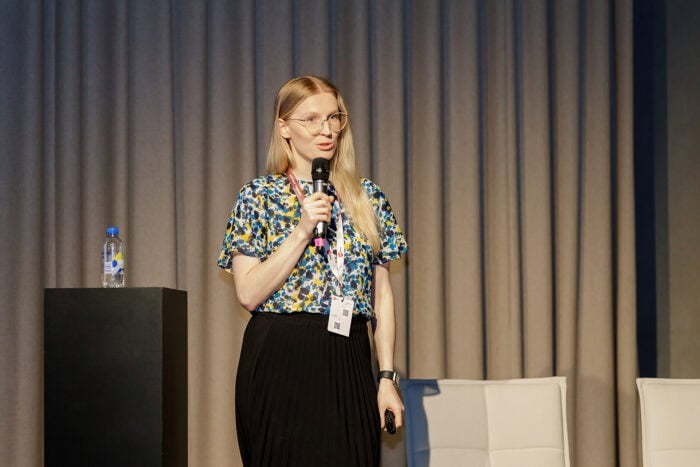
The author of this post is Antti Karlsson, PhD, Development Manager at Auria Biobank (picture by Mikko Tukiainen).
When local evidence is insufficient to support decision-making, research findings and real-world evidence generated elsewhere may help fill the gap.

TTE is particularly valuable when there's a need to directly compare two treatments using real‑world data, especially when such comparisons have not been evaluated in RCTs.

Transportability and generalizability refer to the ability to apply evidence from a single study to different patient populations, clinical settings, or geographical regions.