Our website uses cookies and other similar tools. We also analyze anonymized web traffic. You can choose your cookie preferences below. You may choose only necessary cookies, specific cookies or all cookies. Read more in our privacy policy
Home > All articles > Insights from ISPOR Europe: Patients to Be Included in RWE Studies
Insights from ISPOR Europe: Patients to Be Included in RWE Studies
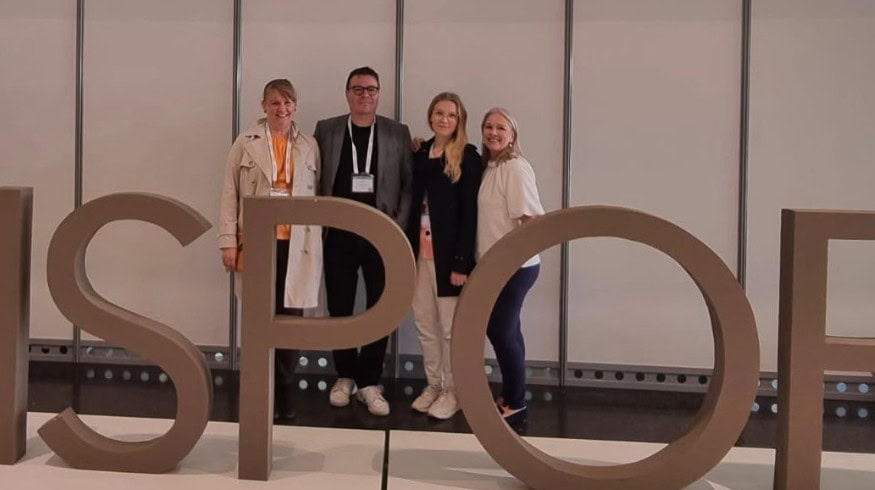
Patient-centricity was one of the key themes at ISPOR Europe in Barcelona this November. Participants also discussed topics such as the use of Real-World Evidence (RWE) in Health Technology Assessment (HTA) and the significance of artificial intelligence. In this article, Medaffcon’s ISPOR attendees share the most important themes from this year’s event.
According to Scientific Advisor, PhD Riikka Mattila, now might be a good time in Finland to consider how patients can be better involved in RWE studies. She believes that patient involvement has been sidelined in Finland due to the registry-based nature of Finnish RWE.
“Involving patients could make RWE even more impactful by ensuring that research results better meet the needs and experiences of patients,” says Mattila.
The Use of Real-World Evidence (RWE) Has Increased in Health Technology Assessment (HTA)
Riikka Mattila notes that the use of RWE has significantly increased in HTA, leading to the development of new RWE methods and the improvement of existing ones. New trending methods include Digital Twins and Target Trial Emulation (TTE). They both are familiar subjects to Medaffcon.
Artificial intelligence is increasingly used in healthcare research and decision-making. New technologies are employed to create predictive models and analyze patient data, which enhances the quality and efficiency of care.
“There has traditionally been a strong emphasis on evidence-based healthcare in the Nordic countries. As a result, there is increasing demand for Nordic RWE. Using RWE leads to more precise decision-making in the adoption of new treatments,” states Riikka Mattila.
How Will the Use of External Control Groups Change in Health Techonology Assesment (HTA) in the Coming Years?
Senior Data Scientist Johanna Vikkula says that ISPOR showed an increase in the use of RWE and External Control Arms (ECA), especially in HTA processes.
“I see the use of external control arms – that is, ECA methods – and RWE in general increasing in the coming years. However, it is essential to communicate openly about the methods used and include sensitivity analyses to strengthen the reliability and credibility of the results,” says Vikkula.
According to Johanna Vikkula, regulatory authorities seem to approach external control arms (ECA) cautiously, even though it has been demonstrated that carefully designed Target Trial Emulation (TTE) models, together with real-world data (RWD), can closely mimic the results of clinical trials.
“It is understandable that authorities are initially cautious about new methods. Therefore, it is our responsibility – as Medaffcon and pharmaceutical companies – to explain these methods well until they become a new standard way of operating,” Vikkula says.
Medaffcon, founded in 2009, is a Nordic research and consulting company specializing in Real-World Evidence, Medical Affairs, and Market Access. With offices in Stockholm, Sweden, and Espoo, Finland, we provide expert services across the Nordic region. Our services combine strong medical and health economic expertise with modern data science.
Since 2017, Medaffcon has been a subsidiary of Tamro Oyj and is part of the PHOENIX group, which is a leading provider of healthcare services in Europe.
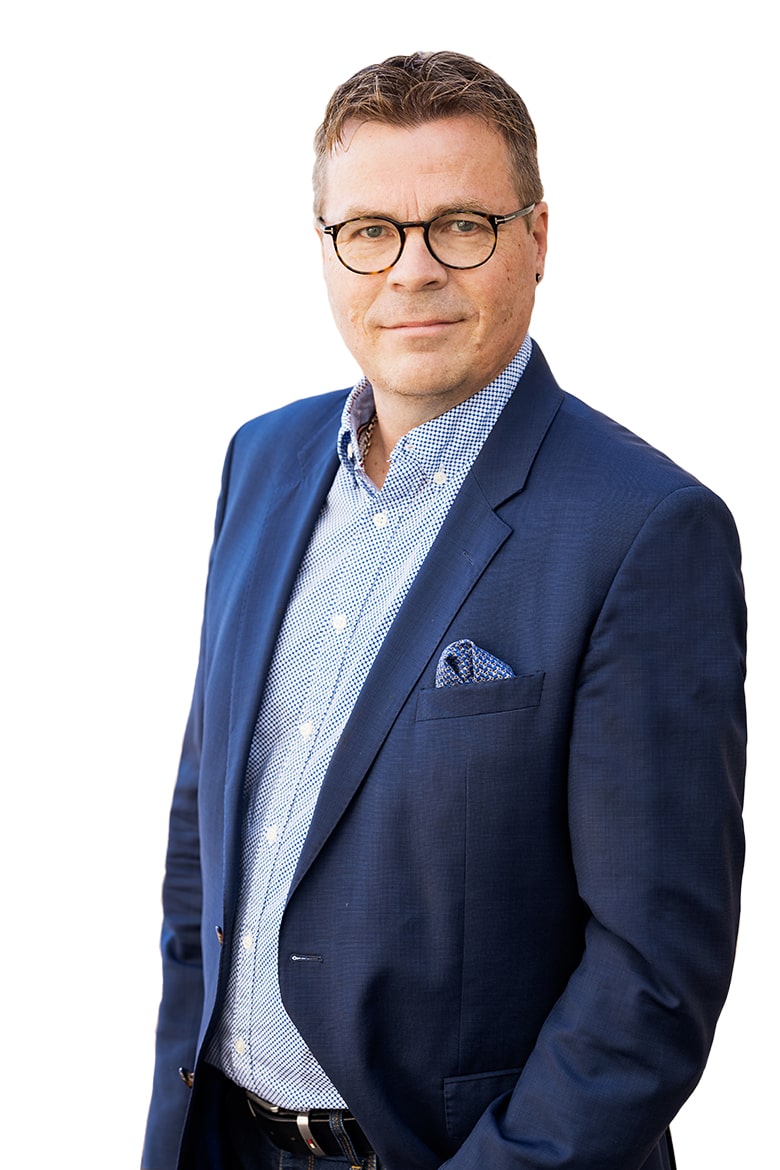
Jarmo joined Medaffcon as a partner and CEO in 2010, having previously worked in various expert and management positions in pharma companies for eight years. Jarmo has a degree in economics and before entering the pharmaceutical industry, he held an office at the Turku School of Economics and also worked as a research fellow at Turku University Hospital.
Jarmo has strong expertise in new health technology innovations and how the demands and expectations of authorities, markets and customers are matched. He also brings to Medaffcon extensive experience in health economics and its applications in research and commercialization, as well as a broad understanding of the ever-changing operating environment.
“From an access point of view, the Finnish health technology market is constantly becoming more demanding and therefore also more attractive from my point of view. On the other hand, increasing demands to demonstrate the effectiveness and cost-effectiveness of healthcare are broadening the scope and opportunities for Medaffcon to be involved in the development of healthcare as a whole”.