Medaffcon and EasyHTA Develop New Tools for Health Economic Assessment
Medaffcon and EasyHTA are developing new ways to make health economic assessments faster and more transparent.

Nordic medicines assessment bodies are already exploring how artificial intelligence can support the review of extensive application materials, evidence synthesis and preparation for decision-making. At a meeting of the ISPOR Nordic Chapter, representatives from Finland and Denmark presented their approaches, both of which emphasise that final decisions and accountability must remain with human experts.
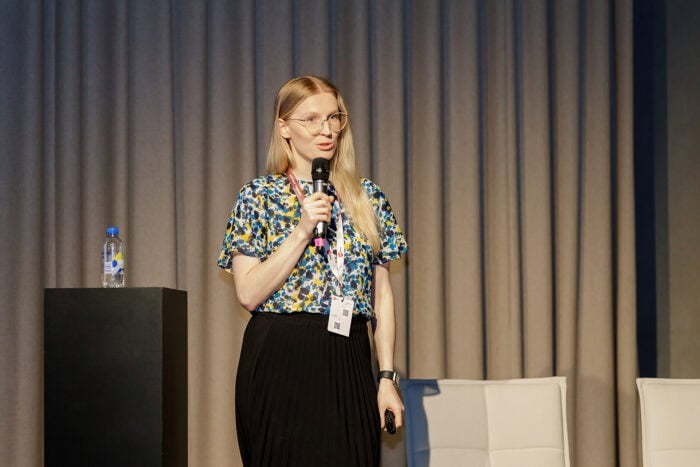
The use of artificial intelligence to support health technology assessment and reimbursement bodies was discussed at an ISPOR Nordic Chapter meeting held in Vienna in early November. “The strong interest in the session reflected how rapidly AI has moved onto the agenda of Nordic medicines assessment bodies”, Lisse-Lotte Hermansson, CEO of Medaffcon Sweden says. Hermansson chaired the panel discussion.
Finland’s Pharmaceuticals Pricing Board, known as Hila, was represented by Chief Pharmaceutical Officer Senni Lassila, who presented examples of how generative AI is being explored and used within the organisation. The extent and purposes of its use may vary between experts and tasks. Examples of potential uses include supporting the review of extensive application materials, organising and drafting assessment texts, comparing information across documents, and examining health economic analyses.
Any outputs produced with AI require expert review and verification. AI is intended to support expert work, not to replace expert judgement or decision-making.
According to Hermansson, maintaining this distinction is essential.
“Nordic authorities are clearly interested in using AI to improve the efficiency of their work, but accountability cannot be transferred to algorithms.”
In the longer term, Hila aims to integrate AI into its case management system. This could reduce the need to transfer information manually between systems, make searching and summarisation more efficient, and ensure that the use of AI is more transparent and consistent.
In Denmark, the use of AI has developed into a concrete collaborative project. Christian Dehlendorff, Chief Biostatistical Consultant at the Danish Medicines Council, presented the EVA project, Evidence in an AI Age.
The EVA project is investigating whether AI can synthesize evidence more quickly without compromising scientific standards. One of the project’s main drivers is the substantial workload involved in systematic literature reviews and in producing evidence to support clinical guidelines, particularly the screening of studies and extraction of data.
EVA is a public-private partnership funded through Innovation Fund Denmark’s Grand Solutions programme. In addition to the Danish Medicines Council, the partners include Silvi.ai, LEO Pharma, KIOX, the University of Southern Denmark, Anders Søgaard, Nordic Healthcare Group, Ghent University, and Johnson & Johnson. The specific use-case presented involved Danish Medicines Council and Silvi.ai.
The use-case is focusing on three questions in particular: Can the same resources be used to produce a greater number of evidence reviews and keep them more up to date? Can AI perform some of the tasks currently undertaken by human reviewers? Can AI be integrated into an evidence synthesis platform?
The performance of the AI is being evaluated in stages. First, workshops were used to define assessment requirements, protocols, and workflows. The AI was then retrospectively compared with assessments previously completed by the Danish Medicines Council.
A prospective test examined a model in which one human reviewer and one AI reviewer worked in parallel. Human verification and the resolution of any disagreements were by design essential parts of the process.
Across five Danish Medicines Council assessments, the agreement between the AI screening results and the DMC’s previous consensus decisions ranged from 85.5% to 93.2%. Outcome data was extracted correctly in around 90% of the time with adverse events performing worst (81.6%).
Although the results are promising, an accuracy level of around 90% also means that expert review remains essential. It is particularly important to understand what types of errors the system makes and how those errors could affect the conclusions.
According to Dehlendorff, five key principles emerging from the EVA project provide a sound basis for the wider use of AI in healthcare assessment:
| 1. Always provide traceable sources | Data, assessments, and the results of evidence synthesis must be traceable to the original source and, wherever possible, to the exact passage within that source. |
| 2. Make inclusion and exclusion decisions transparent | Decisions to include or exclude studies, outcomes, and data must be transparent and justified. |
| 3. Avoid black-box decision-making | Experts must be able to review, correct, and document the reasoning and sources behind AI-generated recommendations. |
| 4. Validate before automating | AI performance should be compared with an independent reference standard using predefined quality criteria. The potential consequences of errors must also be assessed. |
| 5. Keep humans in control and accountable | Experts must participate in and remain accountable for the final decisions. They must be able to review, challenge, correct, or override an AI-generated recommendation. |
Hermansson particularly values the systematic, transparent, and collaborative approach taken to introducing AI in the Danish model.
“Transparency and trust are essential. One of the strengths of the Danish example is that different stakeholders have been involved and asked how the technology could genuinely make their work easier,” Hermansson says.
Medaffcon and EasyHTA are developing new ways to make health economic assessments faster and more transparent.
Three new studies based on Medaffcon’s CORE datasets provide fresh insights into cancer care, examining treatment-related time burden, survival in the HUS region, and the relationship between education and cancer survival.
When local evidence is insufficient to support decision-making, research findings and real-world evidence generated elsewhere may help fill the gap.
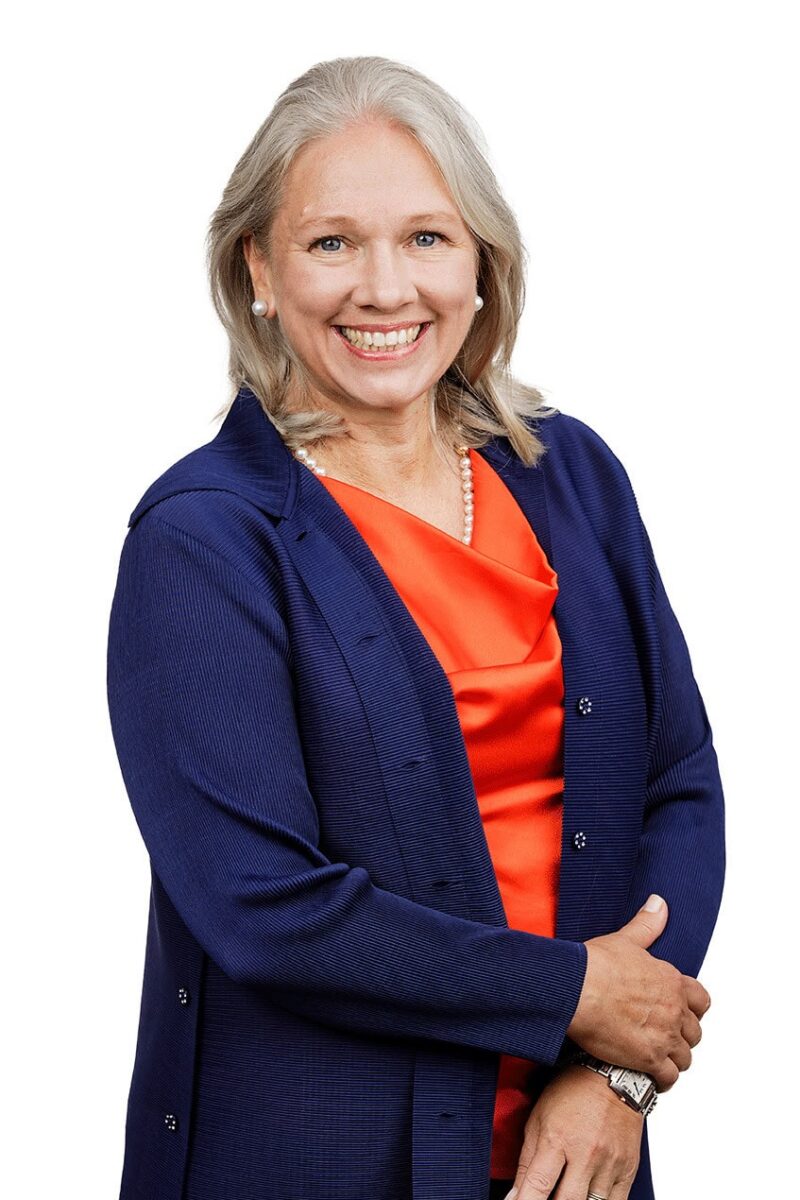
CEO, Medaffcon Sweden
M.Sc (Econ.) & M.Sc (Health Econ)
+46 73 447 47 27
lisse-lotte.hermansson@medaffcon.com
Lisse-Lotte started at Medaffcon 1st of October 2024. Previously she was at a Swedish-German company as CSO Chief Scientific Officer, consulting European companies about Nordic health data opportunities and market access. She has a M.Sc (Econ.) from Helsingin School of Economics and a M.Sc (Health Econ) from Karolinska. Additionally a Ph.D student at the University of Turku in Health Economics. She has obtained a long experience from global pharma and medtech. She has lived over 20 years in Sweden.
The current development gives new possibilities to utilise data. With AI we can produce synthetic data and build digital twins that can actually support drug development and support healthcare providers. Innovative solutions are only useful if they are adopted to daily practice.
Old ways of working will vanish and RWD will be acknowledged as an excellent option or support for RCTs. As RWD is enabling more cost-effective evidence generation for new treatments. Treatments need to be more personalised so that the right drugs, diagnostics and devices are used for the right patients at the right time.