Yongbao Zhuang and Wenyang Shi: Scientific thinking with meaningful real-world impact
Doctoral researchers Yongbao Zhuang and Wenyang Shi are interns at the Medaffcon office in Stockholm.

Sitra has published a model for Finnish Health Data Space. The objective is to improve access to health data for research and innovation, but the proposal raises concerns about increased administrative burden and the role of industry within the model.
Sitra presented the Finnish Health Data Space (FHDS) earlier this week. The model is based on an assessment conducted over the past year, examining how Finland could build a world-leading, nationally integrated health data infrastructure to support the use of artificial intelligence in healthcare, research, and innovation.
The assessment was conducted by Professors Olli Kallioniemi and Kimmo Porkka of the University of Helsinki. According to Sitra, the proposal is aligned with the European Health Data Space (EHDS), international best practices, and Finland’s specific strengths.
The EHDS is an EU legislative framework intended to enable cross-border use of health data for healthcare, expand the secondary use of health data, and strengthen data protection and individual rights. The EHDS regulation was adopted in 2024 and will be implemented in phases between 2025 and 2028.
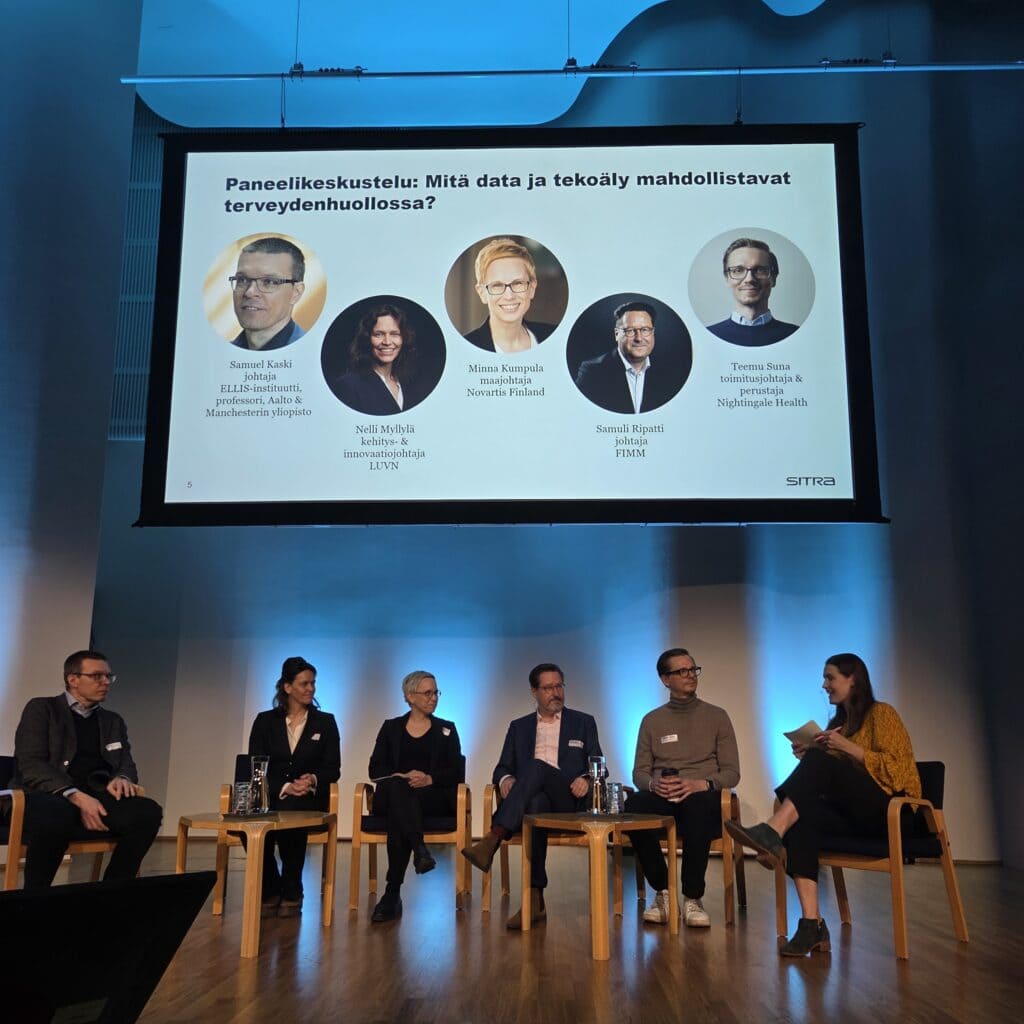
On of the key objectives of the FHDS model is to streamline and accelerate access to health data for research purposes. Finland has extensive, high-quality digital health data, but it is currently fragmented across wellbeing services counties, public authorities, and health information systems. In addition, the permitting landscape is complex, with multiple authorities applying differing interpretations of data protection requirements.
Under the FHDS model, a single national authority would be established to grant research permits, store data, and manage data processing. The FHDS would cover data from biobanks, quality registries, wellbeing services counties, and the Social Insurance Institution of Finland (Kela).
According to Medaffcon Ab Managing Director, Lisse-Lotte Hermansson, the model still requires further clarification.
“It is important to assess whether the model is feasible and how responsibilities and costs would be shared in practice. If the model genuinely speeds up and simplifies access to data, that would be a positive development.”
Hermansson is concerned that the model could increase bureaucracy. At present, Finland’s main challenge in accessing research data is the slowness and complexity of existing processes. She also questions how companies are positioned within the model.
“Where do innovations emerge? Finland aims to create growth, and the health sector has significant potential to deliver it. Many innovations originate in small companies, and their operating conditions should be clearly reflected in the proposal.”
Hermansson suggests that a broader EHDS-based approach covering the Nordic and Baltic countries should be explored.
“Finland alone represents a relatively small data area. Integrating data across the Nordic and Baltic countries would create a substantial international competitive advantage for the region.”
Finland Leads the Way Toward the EHDS, but Local Readiness Remains Limited
Preparing for the EHDS Era in Sweden Requires Major Investments

Doctoral researchers Yongbao Zhuang and Wenyang Shi are interns at the Medaffcon office in Stockholm.

While the majority of Medaffcon’s revenue comes from the pharmaceutical industry, the company’s activities are not limited only to commercial projects. At any given time, several academic projects may be ongoing.

The study generated significant new insights into the epidemiology, treatment, and prognosis of the rare blood cancer Waldenström’s macroglobulinemia.