Yongbao Zhuang and Wenyang Shi: Scientific thinking with meaningful real-world impact
Doctoral researchers Yongbao Zhuang and Wenyang Shi are interns at the Medaffcon office in Stockholm.

What do you remember from the ISPOR conference in November? In this article, Medaffcon’s Principal Consultant Jarmo Hahl, Health Economist Katariina Autio and Medaffcon Sweden’s Managing Director Lisse-Lotte Hermansson discuss which topics are worth following in 2026.
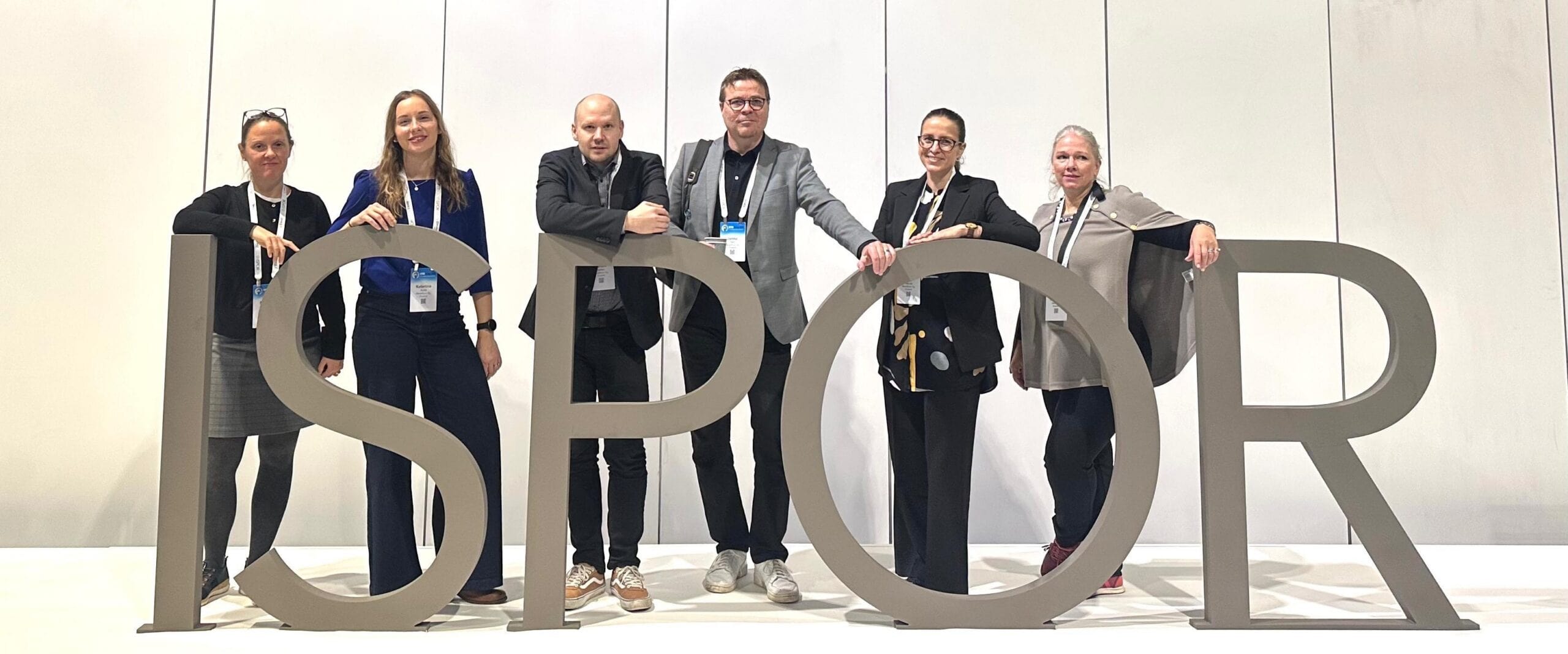
According to Jarmo Hahl, Principal Consultant at Medaffcon, concerns about global competitiveness, regulatory harmonisation, and equal access to treatment for patients were highlighted at ISPOR. The discussions also addressed the future direction of European healthcare and access to pharmaceutical markets.
Many of the themes at ISPOR were directly linked to market-based access and Europe’s position relative to the United States. Key topics included HTA processes (Health Technology Assesment), JCA (Joint Clinical Assessment), and regulatory harmonisation more broadly.
“The central question was whether regulation speeds up or slows down market access for medicines. HTA, JCA, and market-based access are closely intertwined. How well they function directly affects how quickly patients gain access to new treatments,” Hahl states.
According to Hahl, it is important for Finland to ensure that development keeps pace with other countries.
The discussions also raised broader concerns about Europe’s position in global pharmaceutical development. Hahl notes that there is a fear Europe may become too hesitant in its decision-making, and that excessive delays could result in innovations and investments flowing to the United States.
“Patients’ access to medicines is directly linked to innovation. If the market is not attractive, medicines will not be developed or brought to market. The risk is that patients in Europe will have poorer access to medicines than before.”
Regarding EU HTA regulation and JCA, Hahl points out that there is still limited practical experience. Only two JCA cases have been completed so far. According to Hahl, more experience will accumulate next year, at which point it will become clearer how the model truly works in practice.
He notes that while harmonisation carries high expectations, the market situation is exceptionally challenging.
“Regulatory harmonisation is being driven forward by the European Commission, but the harsh market environment acts as a counterforce. These topics were not always discussed in the same sessions, even though they are directly connected.”
Artificial intelligence featured prominently at ISPOR, particularly in discussions focused on HTA and RWE (Real-World Evidence). According to Hahl, stakeholders are already using language models to prepare for HTA processes.
“Many reported using AI to produce literature reviews and other regulatory materials. Marketing authorisation holders are facing increasingly stringent requirements to demonstrate the basis of their assessments.”
Hahl also takes a critical view of the hype surrounding AI. A lot if the presentations concentrated on what the AI could do, not as much what it already does. However, he notes that an insightful comment made by Medaffcon’s Sr. Data Scientist Juhani Aakko was that AI will never be as bad as it is right now because it is continuously improving, and in a fast pace. The real breakthroughs are still ahead.
Hahl believes that HTA, JCA, AI, and market dynamics will remain central themes going forward.
“A great deal has been placed on harmonisation. AI will speed up work, but at the same time market disruptions and geopolitical changes are putting pressure on the system. How these challenges are addressed will largely determine the future of patients in Europe.”
At the ISPOR Congress, Medaffcon’s Health Economist Katariina Autio noted that while AI’s potential in Market Access is widely recognised, real-world use cases are only beginning to emerge. The sensitive nature of pharmaceutical and healthcare data remains a key barrier to adoption.
AI was widely discussed at ISPOR, but to Autio’s disappointment, few truly practical examples were presented. At the same time, this reinforced the view that there is still plenty of room and time to shape how AI will be used.
“The Nordic countries were seen as ahead of many others in adopting AI, but there is still much to learn. Clear legislation and guidance are also needed, and both NICE in the UK and authorities in Australia are currently developing their own guidelines,” Autio says.
Although AI is developing rapidly, challenges remain, particularly around the accuracy of outputs, the tendency of some models to generate hallucinated answers and security concerns. Humans remain in charge of the accuracy and credibility of insights.
In Market Access, AI has the potential to speed up workflows and improve analytical quality.
“One example discussed was the use of AI in systematic literature reviews. Today, large teams screen, analyse and summarise evidence for several weeks (8–10). AI can accelerate and streamline this process to days or hours” Autio explains.
AI could also support the automation of completion of various forms and templates
AI can automate and enhance the localisation, authoring and review of HTA dossiers by enabling modular document assembly. It may also support pricing strategy work, for example by generating pricing scenarios or exploring pricing assumptions.
“Existing Excel-based health economic models can include chatbot-style tools that adapt and provide more versatile functionality in the future,” Autio notes.
As AI develops and new applications emerge, organisations will need to adapt their ways of working and adopt new tools.
“Based on the ISPOR presentations, it’s important to follow AI developments closely and approach them with curiosity,” Autio says.
Psychedelic therapies were a new subject that attracted broad interest. They represent a novel and exciting area in drug development, and many pharmaceutical companies are now investing in it seriously. Some treatments are already in use in the United States and clinical trials are performed in Sweden. Medaffcon Sweden’s Managing Director, Lisse-Lotte Hermansson, examined the status of these treatments at ISPOR.
Psychedelic therapies may offer new hope for conditions such as depression, anxiety disorders, and post-traumatic stress disorder. Psychedelic therapy refers to treatment approaches in which psychedelic substances are used professionally, under supervision, and in a therapeutic setting.
All treatments are carried out under the supervision of trained professionals. Psychedelics exert an acute and often long-lasting effect after just one or a few treatment sessions. They enhance neural network plasticity.
One of the most researched psychedelic therapies now is psilocybin-assisted therapy. Psilocybin is the active compound found in “magic mushrooms.” It is being studied for treatment-resistant depression, cancer-related anxiety, and various addictions. Other psychedelic-assisted approaches include MDMA-assisted therapy and ketamine/esketamine. Additional substances under investigation include LSD, ayahuasca/DMT, and mescaline.
“During the ISPOR discussion, the aim was to understand whether current Health Technology Assessment (HTA) methodologies are appropriate for determining the value of these treatments and supporting access decisions,” Hermansson explains.
If you are interested in continuing the discussion and connecting with Nordic professionals working in health economics and market access, consider joining the ISPOR Nordic Chapter. The Chapter brings together experts from across the region to collaborate on timely topics such as HTA, AI and Joint Clinical Assessment. Read more about the network and its activities here.

Doctoral researchers Yongbao Zhuang and Wenyang Shi are interns at the Medaffcon office in Stockholm.

While the majority of Medaffcon’s revenue comes from the pharmaceutical industry, the company’s activities are not limited only to commercial projects. At any given time, several academic projects may be ongoing.

The study generated significant new insights into the epidemiology, treatment, and prognosis of the rare blood cancer Waldenström’s macroglobulinemia.

Principal Consultant
MSc (Economics)
+358 40 139 4001
jarmo.hahl@medaffcon.com
Jarmo joined Medaffcon as a partner and CEO in 2010, having previously worked in various expert and management positions in pharma companies for eight years. Jarmo has a degree in economics and before entering the pharmaceutical industry, he held an office at the Turku School of Economics and also worked as a research fellow at Turku University Hospital.
Jarmo has strong expertise in new health technology innovations and how the demands and expectations of authorities, markets and customers are matched. He also brings to Medaffcon extensive experience in health economics and its applications in research and commercialization, as well as a broad understanding of the ever-changing operating environment.
“From an access point of view, the Finnish health technology market is constantly becoming more demanding and therefore also more attractive from my point of view. On the other hand, increasing demands to demonstrate the effectiveness and cost-effectiveness of healthcare are broadening the scope and opportunities for Medaffcon to be involved in the development of healthcare as a whole”.