Our website uses cookies and other similar tools. We also analyze anonymized web traffic. You can choose your cookie preferences below. You may choose only necessary cookies, specific cookies or all cookies. Read more in our privacy policy
Home > All articles > The Transformation of the Pharmaceutical Industry Is Putting Pressure on Finland and Europe
The Transformation of the Pharmaceutical Industry Is Putting Pressure on Finland and Europe
The pharmaceutical industry is undergoing a profound global transformation, with implications for Finland and the rest of Europe. Companies are becoming increasingly selective about where they launch new medicines and where they invest in research. According to Teija Kotomäki, Pfizer’s Managing Director in Finland, reversing this trend will require a strong commitment from the entire healthcare ecosystem.
“Finland accounts for just 0.3% of the global pharmaceutical market. That gives a good indication of our relative weight and negotiating position,” said Teija Kotomäki at Medaffcon’s EMMA event on 30 September.
The United States is no longer prepared to pay significantly more for pharmaceutical innovation than other countries. Donald Trump has introduced the Most Favoured Nation (MFN) principle into US pharmaceutical pricing policy. The aim is to ensure that pharmaceutical companies offer the United States a price that is at least as favourable as the lowest price available to customers in other developed countries.
“Medicines have become part of trade policy. Discussions about access to medicines have partly moved from healthcare experts to trade policy decision-makers, and this shift is also being felt in Finland,” Kotomäki said.
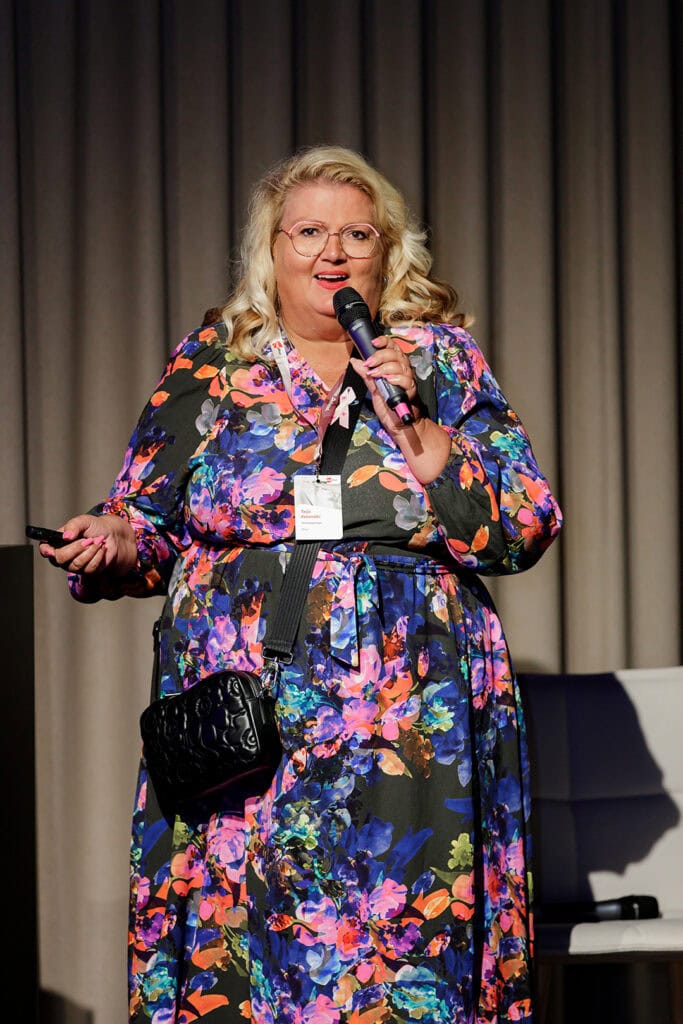
Teija Kotomäki spoke at Medaffcon’s EMMA event on 30 September 2026.
A Risk of Declining Research Investment
According to Kotomäki, the impact of these developments is already visible across Finland and Europe, as companies carefully assess which markets will gain access to new medicines.
At the same time, China’s role in pharmaceutical research continues to grow. Europe, the Nordic countries and Finland are competing globally for pharmaceutical and vaccine research investments.
The innovative pharmaceutical industry invests around USD 300 billion in research and development every year. Attracting a share of these investments requires an operating environment that supports research activities and enables timely access to new medicines and vaccines.
According to Kotomäki, Finland’s Growth Strategy for Health Sector Research and Innovation, launched in 2014, and the initiatives built around it have delivered significant benefits. Pharmaceutical companies operating in Finland have now pledged to double their annual investments if Finland continues to strengthen its innovation-friendly environment and accelerate the adoption of new medicines, among other measures. This would increase annual investments from approximately EUR 500 million to EUR 1 billion by 2030.
Kotomäki emphasised that strengthening the operating environment for the pharmaceutical industry requires a shared commitment across the entire healthcare ecosystem, including companies, authorities, policymakers and healthcare professionals.
Decisions on New Medicine Launches Are Not Made in Finland
What can be done to improve the situation? One of the most important measures is to speed up patient access to new treatments. As of January 2026, 44% of the medicines approved by the European Medicines Agency (EMA) between 2021 and 2024 were available in Finland.
On average, it took 448 days from marketing authorisation to patient availability. Finland ranked 19th among EU countries, placing slightly below the EU-27 average.
Some medicines do not reach the Finnish market because of challenges in market access processes, while others are affected by companies’ own launch decisions. Kotomäki noted that decisions on launching new medicines are not made in Finland.
“Global headquarters decides whether a medicine will even be launched in Europe. Launching a medicine is an investment decision, and companies must carefully consider where their limited resources can achieve the greatest impact.”
Delays in the adoption of innovative medicines affect not only patient care but also Finland’s attractiveness as a research location. There is little incentive to conduct studies of new medicines in Finland if the standard of care is no longer aligned with current international standards and patients continue to receive older therapies.
“If innovative treatments are not available, research projects will not come to Finland. If we fall too far behind the leading countries in adopting new treatments, our data will become outdated and less relevant for pharmaceutical research,” Kotomäki said.
Health Data Remains Finland’s Strength
Finland has many strengths from the perspective of pharmaceutical research. These include high-quality healthcare, strong scientific expertise and internationally recognised centres of excellence, particularly in oncology and vaccine research.
“From a vaccine research perspective, Finland punches well above its weight.”
Finnish patients are generally positive towards participating in research, and Finland’s health data assets, including national registries, electronic health records and biobanks, are among the best in the world.
To attract research investments, Finland also needs efficient collaboration with authorities, including predictable regulation, rapid decision-making and open dialogue between stakeholders.
“The nationally coordinated one-stop-shop process for research permits and contracts envisaged by the FinTrials initiative is an important reform that should be completed as soon as possible,” Kotomäki said.
It is also important to ensure that the ongoing harmonisation of medicine assessment processes progresses without delay. In market access, Finland should likewise aim for a national one-stop-shop model covering both medicines and vaccines.
According to Kotomäki, such a model should include clear timelines for decision-making and the possibility of negotiating innovative agreements that can incorporate real-world data generated during treatment, for example in oncology.
“We in the pharmaceutical industry work continuously to bring new medicines and research projects to Finland. Achieving that goal requires a strong commitment from the entire healthcare ecosystem.”