
Medaffcon Makes Medtech Measurable When Data Determines Market Access
Medaffcon brings to the health technology market the kind of effectiveness and cost-conscious thinking well established in the pharmaceutical industry.
The objective is to improve access to health data for research and innovation, but the proposal raises concerns about increased administrative burden and the role of industry within the model.
Transportability and generalizability refer to the ability to apply evidence from a single study to different patient populations, clinical settings, or geographical regions.
The reform of the Secondary Use Act will establish a new decentralised process, in parallel to the current centralised permit model in which Findata grants all data permits.

Finland is moving toward the European Health Data Space (EHDS) with strong national systems, but local readiness, funding, and interoperability remain challenges.

The European Health Data Space Regulation (EHDS) is set to transform the use of health data across Europe.

Eliminating low-value care is a key means of safeguarding the sustainability and quality of healthcare.
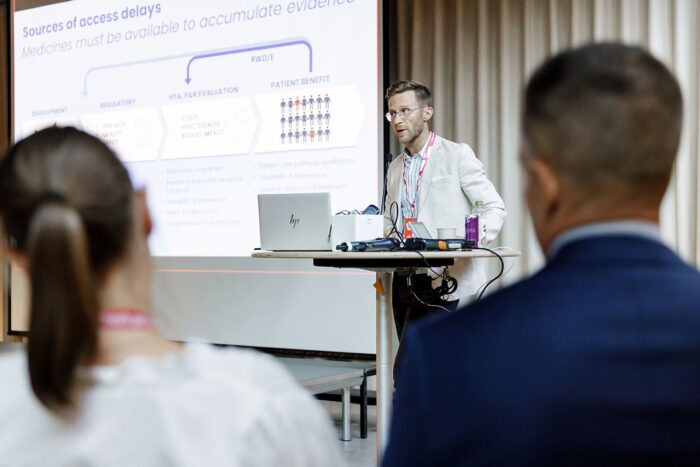
Access times to medicines vary greatly between European countries, and delays in oncology drugs in particular are increasing.
A Nordic approach to data collection carried out through Medaffcon saves clients’ resources, reduces duplicate work, and accelerates processes.
Target Trial Emulation does not replace randomized controlled trials, but it applies their logic and rigor to real-world data analysis.
Medaffcon's European Lung Cancer Congress (ELCC) poster showcased key findings from a recent study on non-small cell lung cancer (NSCLC).
Johan Rehnberg started working as a Scientific Advisor at Medaffcon’s Swedish office in August 2024. He is a dynamic researcher who values opportunities to learn new things and develop his skills – opportunities that Medaffcon provides.
The algorithm was originally developed to extract smoking status from patient texts with purpose to analyze the effects of smoking on postoperative complications. Today, it is also being utilized in lung cancer research.
Artificial intelligence (AI) is transforming research and working life across various industries. But what is its significance in health data analysis and real-world evidence (RWE) research? Medaffcon’s experts, Juhani Aakko and Lisse-Lotte Hermansson, share their perspectives on AI in their work.
Patient-centricity, Real-World Evidence (RWE) in Health Technology Assessment (HTA) and the significance of artificial intelligence were some of the topics at ISPOR Europe in Barcelona this November.
Medaffcon's operations in Sweden are well-established and growing, offering pharmaceutical companies RWE studies and Market Access services delivered by Data Scientists, Market Access experts, and RWE specialists working together.
In the coming years, breakthroughs in neurological and psychiatric drug research are expected to change treatment practices and significantly improve patients’ quality of life.
Medaffcon experts are versatile professionals who adapt to customer needs. In this article, one of them, Liisa Ukkola-Vuoti, a senior scientific advisor at Medaffcon, describes her work over two weeks. Liisa is also one of the writers for the Health Data Site by Medaffcon.
Finland will become an even more attractive place for conducting RWE (real-world evidence) research when it becomes a seamless part of the European Health Data Space (EHDS). Thus, health data can be used more efficiently across the European Union (EU), and datasets can be combined on an EU-wide basis.
A key challenge in using real-world healthcare data (RWD) is how to standardize data across different healthcare providers and countries.
Hospital data lakes offer clinicians diverse real-world data (RWD) that supports their work. Dr. Heikki Ekroos, Chief Physician of Pulmonary Diseases at Helsinki University Hospital (HUS) Porvoo Hospital, presented real-world evidence (RWE) studies that were based on HUS data lakes data at Medaffcon’s EMMA client event.
Real-world data (RWD) created in Finnish healthcare is comprehensive and high-quality. Sweden, another Scandinavian country, also offers high-quality healthcare data for real-world evidence generation.
Finland boasts numerous strengths that make it an outstanding choice for real-world data-based (RWD) research.
Selecting the right interactions is a key factor for success. Therefore, the client should also consider how well the partner understands the pharmaceutical industry's needs. When the partner has extensive hands-on experience from the industry, these irreplaceable insights enable the partner to guide the project at different strategic levels, ensuring that the client’s various needs can be identified and met.
My list of publications includes over 20 peer-reviewed scientific articles. One of them is a special one because the Finnish Current Care Guidelines mention it for heart failure. This blog discusses the impact of research by Medaffcon on treatment practices.
A study published in January 2024 in the Scandinavian Journal of Gastroenterology has revealed that the treatment of adults with Short Bowel Syndrome (SBS-IF) clearly has significant room for improvement.
Sweden's publicly funded healthcare system and universal access to specialized health care make the data derived from Sweden broadly generalizable, covering diverse populations including different ethnic backgrounds.
The study describes how Multiple Myeloma treatments have changed in 2013–2019, and what the estimated treatment costs are.
Utilising the data lake of the Hospital District of Southwest Finland (TYKS), Medaffcon, Pfizer and TYKS have examined the clinical adoption of new medications for advanced renal cell carcinoma and the utility of data extracted without extensive manual extraction.
Hospital data lakes are a central source of information in Medaffcon's studies, and often, data retrieval can be automated. However, what happens when more complex matters need to be extracted from the databases? In such cases, manual extraction is used, says Medaffcon's Scientific Advisor, Riikka Mattila
Swedish real-world health data, a recent addition to the in-house capabilities of Medaffcon, offer unique possibilities for measuring disease burdens and determinants, the effects of different exposures, and the outcomes of various health conditions in a population of almost 10.5 million people.
Real-world data (RWD) can, however, be utilised also in a variety of non-clinical medical and pharmaceutical studies to compare aspects such as treatment outcomes and resource utilisation between different geographies and treatment options, reminds Samuli Tuominen, senior data scientist at Medaffcon.
AstraZeneca Finland, Medaffcon and clinical experts have investigated what is the rarer endotype of severe asthma using biomarker data obtained from the data lake of Turku University Hospital (TYKS), Auria.
The study utilised propensity-score matching to compare the performance of two immunosuppressive drugs in patients with primary sclerosing cholangitis after liver transplantation.
Dr. Essi Havula has done an impressive international career as a researcher and top scientist. She joins Medaffcon team to strengthen the scientific possibilities of utilizing real-world-data and evidence.
Experts at Medaffcon have perused volumes of real-world data on patients with atopic dermatitis to provide new insights into co-morbidities and treatment patterns associated with the chronic skin condition.
Sweden’s abundance of high-quality digital healthcare data has enabled what is surely one of the most exhaustive study of mortality associated with Clostridioides difficile infections (CDI) in the world.
Studies mapping short-term absences provide new information on the burden caused by diseases for healthcare services and the society.
Research based on Finnish and Swedish real-world health data can be generalised also to other settings and populations, says Dr. Johanna Simin, real-world epidemiologist at Medaffcon.
Joining Medaffcon enables Dr. Johanna Simin to leverage her expertise to advance real-world data use and evidence-driven health. Medaffcon, in turn, can augment its in-house capabilities with the high-quality digital healthcare data found in Sweden.
Medaffcon has added Swedish healthcare registries to its capabilities as it continues to pursue growth and facilitate data utilisation by providing pharmaceutical companies access to rich and relevant healthcare data.
Finnish hospitals’ data lakes offer an opportunity to access tremendously rich real-world data on treatments and outcomes that enable research on topics ranging from medical questions to health economics.
The result of a recent original study surprised the researchers: the costs of treating heart failure tenfold in exacerbation. The results were published in Duodecim on 23 March 2023.
How to review and analyse a million sentences? Text mining decreased the work of clinical experts and accelerated the research process.
Finland has unique data for pharmaceutical purposes and unstructured healthcare data can also be already effectively utilised.